
DOC Accounting equation The basic accounting equation marife cornejo
Content
It focuses on the concept of duality i.e. each transaction has a dual effect and affects two components of the balance sheet. You will notice that stockholder’s equity increases with common stock issuance and revenues, and decreases from dividend payouts and expenses. Stockholder’s equity is reported on the balance sheet in the form of contributed capital (common stock) and retained earnings. This expansion of the equity section allows a company to see the impact to equity from changes to revenues and expenses, and to owner investments and payouts. It is important to have more detail in this equity category to understand the effect on financial statements from period to period.
The accounting equation helps to assess whether the business transactions carried out by the company are being accurately reflected in its books and accounts. An accounting equation is a tool businesses of all sizes must use to help keep a handle https://www.bookstime.com/articles/the-accounting-equation-may-be-expressed-as on their financial health. Even if you have an accountant who handles the numbers for you, you should have a basic understanding of the accounting equation. The accounting equation is the foundation of the double-entry accounting system.
Connect With a Financial Advisor
The accounting equation relies on a double-entry accounting system. In a double-entry accounting system, every transaction affects at least two accounts. For example, https://www.bookstime.com/ if a company buys a $1,000 piece of equipment on credit, that $1,000 is an increase in liabilities (the company must pay it back) but also an increase in assets.
This is the business’s total assets minus its total liabilities. It represents what is left from the assets when all the liabilities have been paid off. Assets are resources a company owns that have an economic value. Assets are represented on the balance sheet financial statement.
Accounting Equation Formula and Calculation
Cash includes paper currency as well as coins, checks, bank accounts, and money orders. Anything that can be quickly liquidated into cash is considered cash. Cash activities are a large part of any business, and the flow of cash in and out of the company is reported on the statement of cash flows.
It can be defined as the total number of dollars that a company would have left if it liquidated all of its assets and paid off all of its liabilities. Understand what the accounting equation is, learn the elements of the basic accounting equation, and see examples. Unearned revenue represents a customer’s advanced payment for a product or service that has yet to be provided by the company.
What Is a Liability in the Accounting Equation?
Every transaction is recorded twice so that the debit is balanced by a credit. The accounting equation states that a company’s total assets are equal to the sum of its liabilities and its shareholders’ equity. On the other hand, the accounting equation reveals the relationship between assets, liabilities, and equity. This fundamental element of the balance sheet helps companies determine if they have enough funds for operations or expansion as well as how much debt they have.
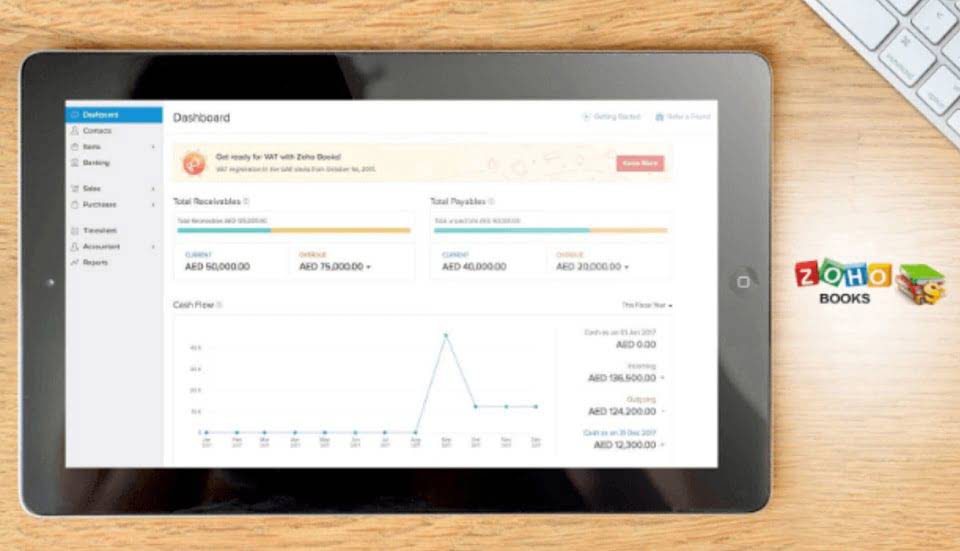
Accounting software is a double-entry accounting system automatically generating the trial balance. The trial balance includes columns with total debit and total credit transactions at the bottom of the report. As a result of the transaction, an asset in the form of merchandise increases, leading to an increase in the total assets.
Please fill up the form to begin learning.
The shareholders’ equity number is a company’s total assets minus its total liabilities. While the basic accounting equation may appear simple, it can grow more complicated in practical use. Let’s look at a few examples to depict how transactions can affect the accounting equation. Accounts payable recognizes that the company owes money and has not paid. Remember, when a customer purchases something “on account” it means the customer has asked to be billed and will pay at a later date.
- This means if you buy something for $500, and it shows up as an asset on one side of the equation, then there must also be a liability or equity account entry with equal value.
- It represents what is left from the assets when all the liabilities have been paid off.
- Cash activities are a large part of any business, and the flow of cash in and out of the company is reported on the statement of cash flows.
- Accounting can be described as a process of managing and recording various kinds of financial transactions over a period that is related to businesses.
- Double-entry bookkeeping started being used by merchants in Italy as a manual system during the 14th century.
- Assets are represented on the balance sheet financial statement.
This may be difficult to understand where these changes have occurred without revenue recognized individually in this expanded equation. Thus, the accounting formula essentially shows that what the firm owns (its assets) has been purchased with equity and/or liabilities. Companies compute the accounting equation from their balance sheet. They prove that the financial statements balance and the double-entry accounting system works. The company’s assets are equal to the sum of its liabilities and equity. You can find a company’s assets, liabilities, and equity on a few key financial statements, including the balance sheet and the income statement.
What Is the Accounting Equation?
Since the company has not yet provided the product or service, it cannot recognize the customer’s payment as revenue, according to the revenue recognition principle. The company owing the product or service creates the liability to the customer. However, equity can also be thought of as investments into the company either by founders, owners, public shareholders, or by customers buying products leading to higher revenue. Liabilities are amounts of money that the company owes to others. Sometimes, liabilities are called obligations — the company has an obligation to make payments on loans or mortgages, or they risk damage to their credit and business.
Examples of supplies (office supplies) include pens, paper, and pencils. At the point they are used, they no longer have an economic value to the organization, and their cost is now an expense to the business. Answers will vary but may include vehicles, clothing, electronics (include cell phones and computer/gaming systems, and sports equipment). They may also include money owed on these assets, most likely vehicles and perhaps cell phones. In the case of a student loan, there may be a liability with no corresponding asset (yet).
Accounting Equation: What You Need to Know for Your Small Business
If a business transactions results in the increase of assets, there will also be a corresponding increase in the amount of either capital or liabilities by the same amount. This equation contains three of the five so called “accounting elements”—assets, liabilities, equity. The remaining two elements, revenue and expenses, are still important (and you still need to track them) because they indicate how much money you are bringing in and how much you are spending. However, revenue and expenses are not part of the accounting equation.
- Companies compute the accounting equation from their balance sheet.
- Capital increases or other liability increases or asset decreases.
- The monthly trial balance is a listing of account names from the chart of accounts with total account balances or amounts.
- An asset can be cash or something that has monetary value such as inventory, furniture, equipment etc. while liabilities are debts that need to be paid in the future.
- Our writing and editorial staff are a team of experts holding advanced financial designations and have written for most major financial media publications.
A company’s equity is what remains after a business has paid all of its creditors. An asset is what gives your business added value on top of cash flow. Subsequently, a business’s assets can include cash, liquid assets (i.e., certificates of deposit and Treasury bills), prepaid expenses, equipment, inventory, and property. In fact, just about anything the company owns is classified as an asset. Money that customers owe for their purchases is called accounts receivable. These are in a class with other items worth owning like land or buildings.
We show formulas for how to calculate it as a basic accounting equation and an expanded accounting equation. All of this information is useful to you as a business owner, of course. Assets represent the valuable resources controlled by the company, while liabilities represent its obligations.
Equipment is considered a long-term asset, meaning you can use it for more than one accounting period (a year for example). Buildings, machinery, and land are all considered long-term assets. Machinery is usually specific to a manufacturing company that has a factory producing goods.


Leave a Reply